
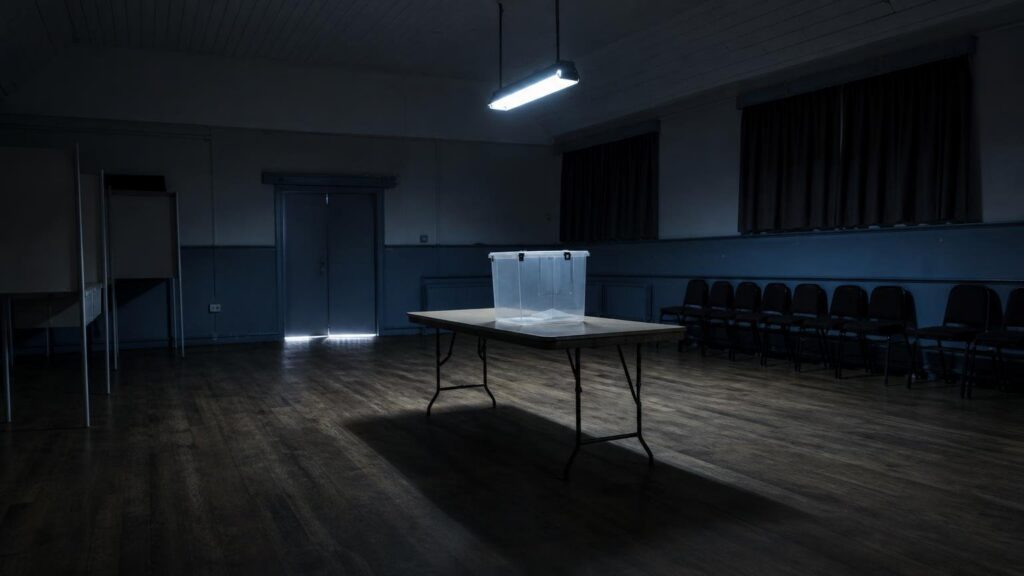
For the first time in more than two decades, the Organization for Security and Co-operation in Europe (OSCE) will not observe a U.S. federal election. The Trump administration has declined to invite the group to monitor the upcoming midterms, effectively blocking oversight that has accompanied every federal election since 2002.
That should alarm anyone who cares about free and fair elections in this country.
What the OSCE Actually Does
The OSCE is an international organization of 57 member states, most of them in Europe and the global North. The United States is a member. Founded in the 1970s and working as a partner to the United Nations, the group focuses on human rights, conflict prevention, and election integrity.
Monitoring elections in member countries is part of that mission. During the 2022 midterms, for example, OSCE observers examined:
- How the election was administered
- Voter registration
- The drawing of electoral maps
- Election law
- Media coverage
This is routine, nonpartisan work. Observers don’t run elections or overturn results. They watch, document, and report. For more than 20 years, through administrations of both parties, the U.S. let them do exactly that.
Unprecedented, and in Bad Company
Refusing that scrutiny puts the United States in a very small club. According to the reporting, only Russia and Belarus have also rejected OSCE election monitoring.
When the only other countries turning away election observers are Russia and Belarus, that tells you exactly which direction we’re heading.
Neither country is known for competitive elections. Both are textbook examples of governments that hold votes while making sure nobody independent is watching too closely. Joining them is not a neutral administrative decision. It’s a signal.
Why This Matters
Governments that are confident their elections are clean don’t usually mind having observers in the room. Transparency is the easiest way to prove legitimacy. Shutting the door raises an obvious question: what is there to hide?
This move doesn’t happen in a vacuum. Critics have already raised serious concerns about the administration’s broader pressure on election systems, and removing international oversight fits a familiar pattern seen in countries sliding toward authoritarian rule:
- Weaken or sideline independent watchdogs
- Reduce outside scrutiny of how elections are run
- Control the narrative about the results afterward
Each step on its own can be explained away. Taken together, they add up to an erosion of the checks that make elections trustworthy.
The Bottom Line
For over twenty years, international observers have been a quiet, normal part of American elections. Ending that now, ahead of a midterm, is a break from long-standing practice and one more sign that this country is drifting farther from democratic norms and closer to the governments it once criticized.
Pay attention, stay informed, check your voter registration, and vote. If outside eyes won’t be watching this time, it’s even more important that we are.
Details in this post are based on recent news reporting; readers should follow ongoing coverage as the story develops.